What we missed
Vanuatu 4-1 New Cal: We Got the Story Right, Not the Score
We called Vanuatu to edge it. They didn't edge anything. Four goals later, here's what we missed and why the read wasn't wrong.

 By Tom and Sheila28 September 2026
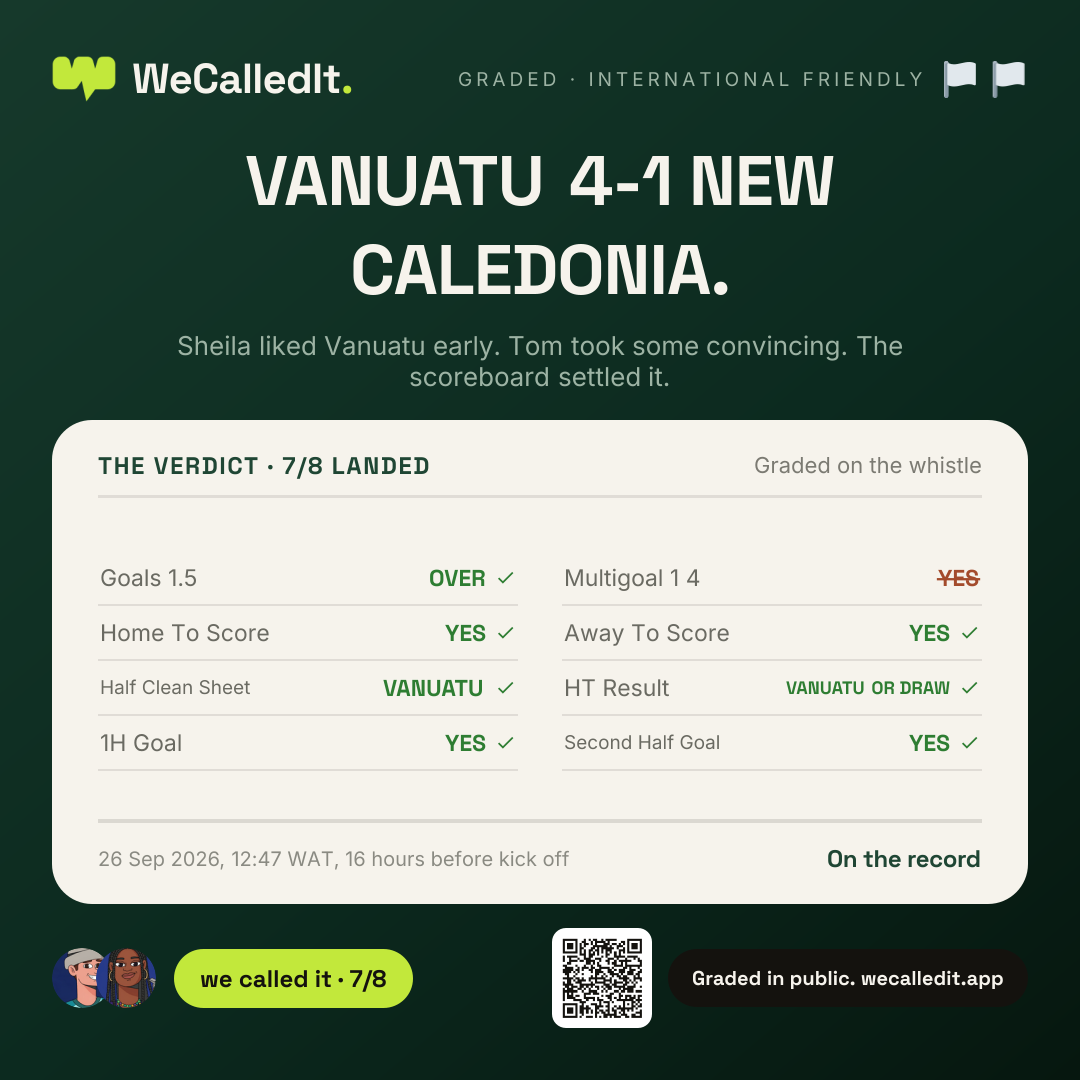
We called Vanuatu to win a scrappy, entertaining Pacific friendly. They won it. Just not in the way we expected. A 4-1 scoreline has a way of making a 2-1 prediction look timid, and honestly, it was.
What We Got Right
Five markets landed. First-half goal, yes. Second-half goal, yes. Both sides to score, yes. Over 1.5 total goals, yes. Half-time home or draw, yes. The bones of the call were sound. Vanuatu were the right side to back, the scoring form was real, and the match delivered exactly the kind of open, high-energy football we anticipated from two Pacific sides playing their third game in a week.
Sheila
Vanuatu scored in every single match this window. Every one.
She was right. The evidence was as clean as it gets at this level, and backing Vanuatu to score was one of the easiest calls on the card. New Caledonia getting on the board also landed, which completes the BTTS picture nicely.
The half-time read deserves a mention too. New Caledonia came in organised and pragmatic, exactly as flagged, and the match sat level at 1-1 at the break. That covered the home-or-draw half-time call cleanly.
Where It Fell Apart
The exact score and the goals band. We had 2-1. The actual scoreline was 4-1. We had 1-4 total goals at 73.6% probability and called it confidently. The match produced five. Those two misses are connected, because one is just the consequence of the other.
Tom
The blowout tail exists but it's not strong in a friendly between two even-ish Pacific sides.
That logic was reasonable. The simulation agreed. But Vanuatu did not read the simulation. Whatever happened in that second half, and without event data we cannot point to a single turning-point moment, the floodgates opened in a way the model considered unlikely but not impossible. A 73.6% call means roughly one in four times the market goes against you. This was one of those times.
The xG edge we identified, 1.72 for Vanuatu versus 1.51 for New Caledonia, was real. But xG models built on small tournament windows can miss momentum, team shape after the break, and the specific way fatigue hits one squad harder than another after three games in nine days. We flagged the fatigue factor. We just assumed it would affect both sides equally.
What This Tells Us Going Forward
The core read on Vanuatu was correct. Taufete'e's return, the free-scoring form in this window, the morale from the Solomon Islands thriller, all of it was real signal. We were right about the winner, right about the scoring patterns, right about the half-time picture. We were too conservative about the ceiling.
For Pacific football in short tournament windows, the blowout tail is worth more respect than a single three-match data sample suggests. When one side is clearly rolling and the opposition's defensive numbers are soft, the probability of a comfortable winning margin compresses faster than the model accounts for. That is the adjustment we carry into the next fixture.
Five from seven markets landed. The two that missed were connected, and they were both about the same thing: we capped Vanuatu's ceiling when we should have left more room at the top. Noted.
See every call Tom and Sheila have made, win or miss.
See the record